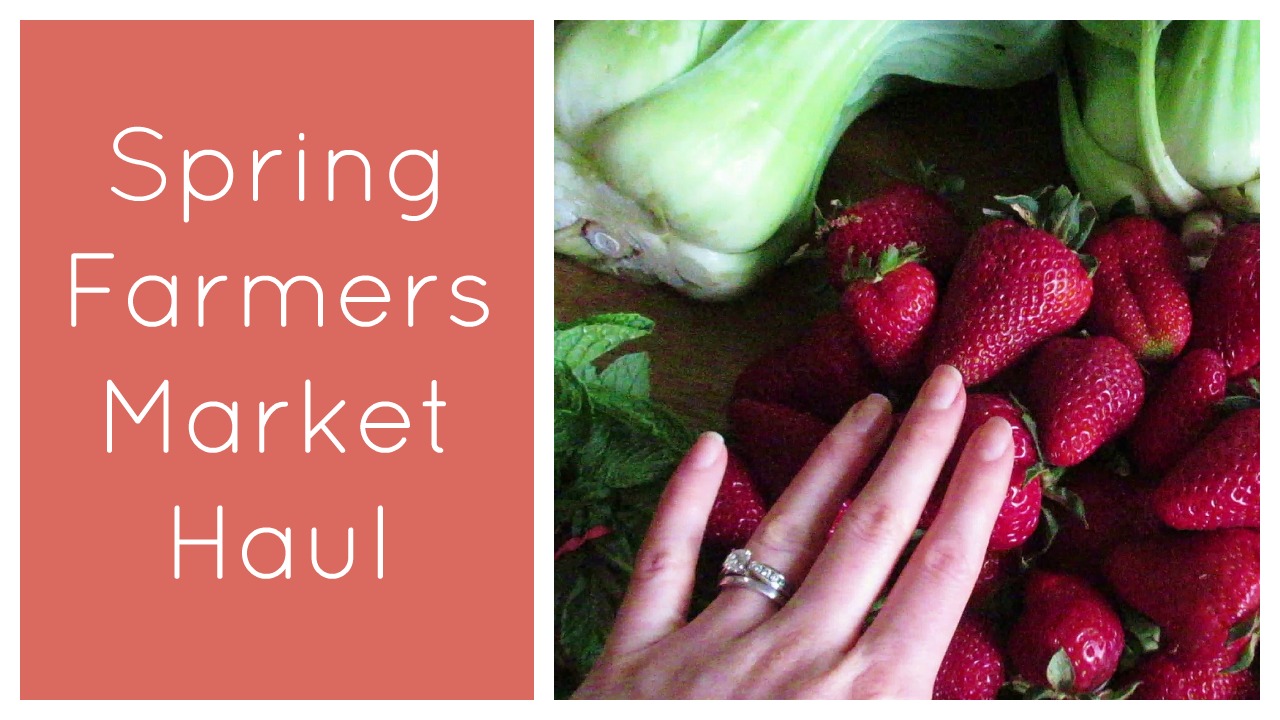
Here's everything I got at my local farmers market in early May in Virginia! Spring is one of my favorite times of the year because of all of the fresh, crisp produce we get after a long, cold winter. We've got so many delicious spring fruits and veggies right now and I'm loving it!
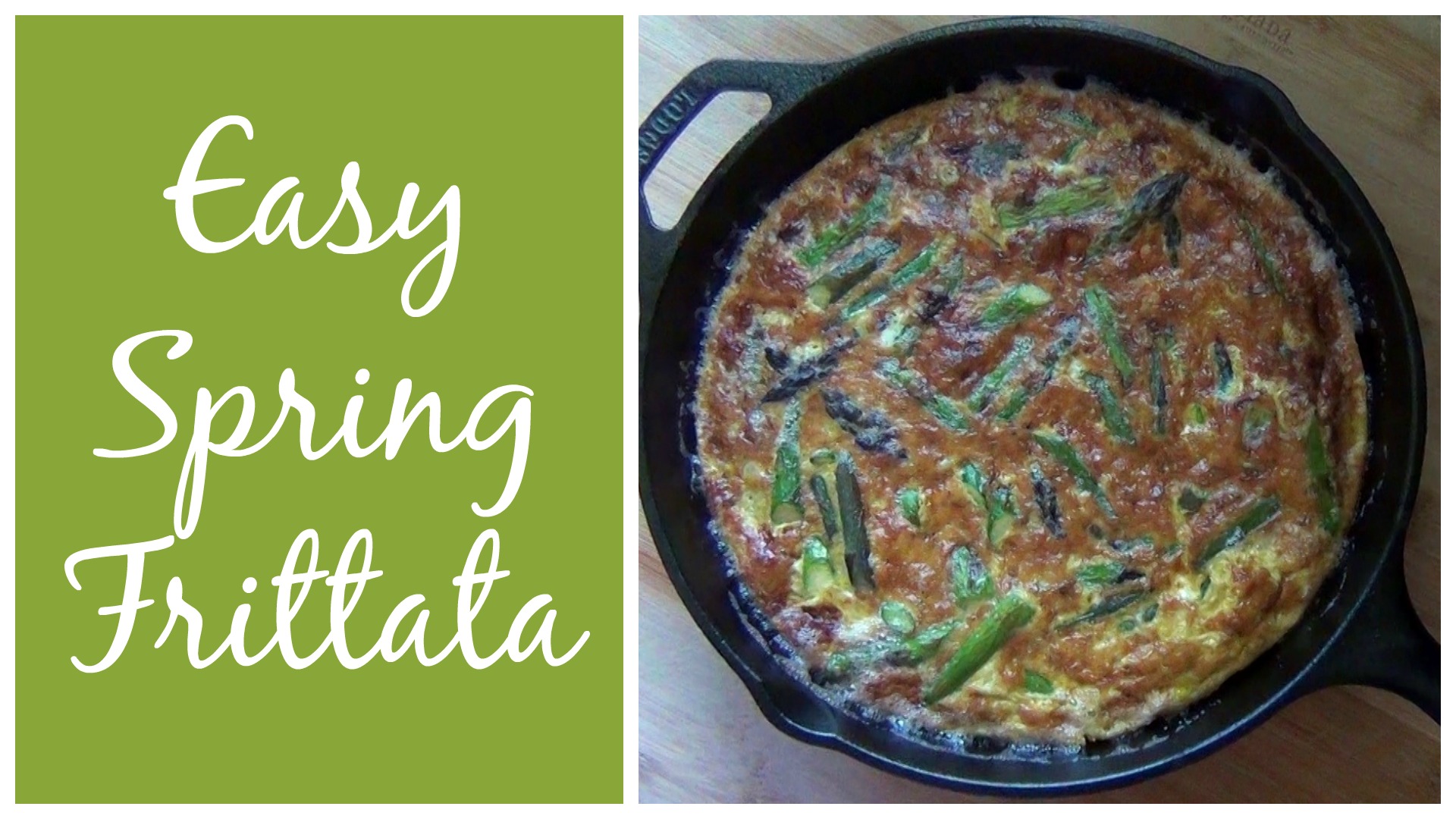
Mother's Day is right around the corner and what better way to celebrate your mother than a delicious homemade meal! This frittata is simple and quick to make and uses one of my favorite spring foods: asparagus.
2 spring onions, white and green parts thinly sliced
1 pound asparagus, trimmed and cut into 1.5 inch pieces
8 large eggs
1/2 teaspoon salt
pepper to taste
Butter or other fat for cooking vegetables and greasing cast iron skillet
Directions
Heat butter or fat of choice in a skillet over medium heat. Add onions and cook, stirring frequently, until soft and translucent, about 5 minutes. Remove cooked onions from pan and set aside.
Add more butter to your skillet and cook asparagus until crisp tender and bright green, about 5 minutes. Remove cooked asparagus from pan and set aside.
Add eggs, salt, and pepper to a large bowl and whisk thoroughly.
Add cooked onions and asparagus to the beaten eggs and mix until everything is evenly distributed.
Grease a cast iron skillet with butter, lard, coconut oil or other fat and heat over medium high heat. Add egg and vegetable mixture to the hot skillet and turn heat down to medium low. Cook until the edges of the frittata are set and pull away from the skillet, about 10 minutes. The center of the frittata will still be liquid at this point.
Set your broiler to low and place the skillet directly under the broiler. Cook until the frittata is cooked through and the top is golden brown, about 3-5 minutes. Watch closely during this stage to make sure that the frittata doesn't accidentally burn.
Remove frittata from oven, allow to cool slightly, slice, and serve. I like to cut mine into 8 slices.
Chipotle has recently announced that they are now GMO free! This is great for people looking to avoid GMOs, but what has actually changed with the food and what work still needs to be done?
Also in this Real Food Round-Up, Tyson has committed to reducing antibiotic use in it's chickens, Pepsi is removing aspartame from it's diet drinks, and a recipe that takes strawberries to the next level.
Making your own tortillas is great, but it can be tricky. The good news is, using a tortilla press makes the whole process a lot easier! Here's how I use my tortilla press to make fresh corn and whole wheat tortillas at home.
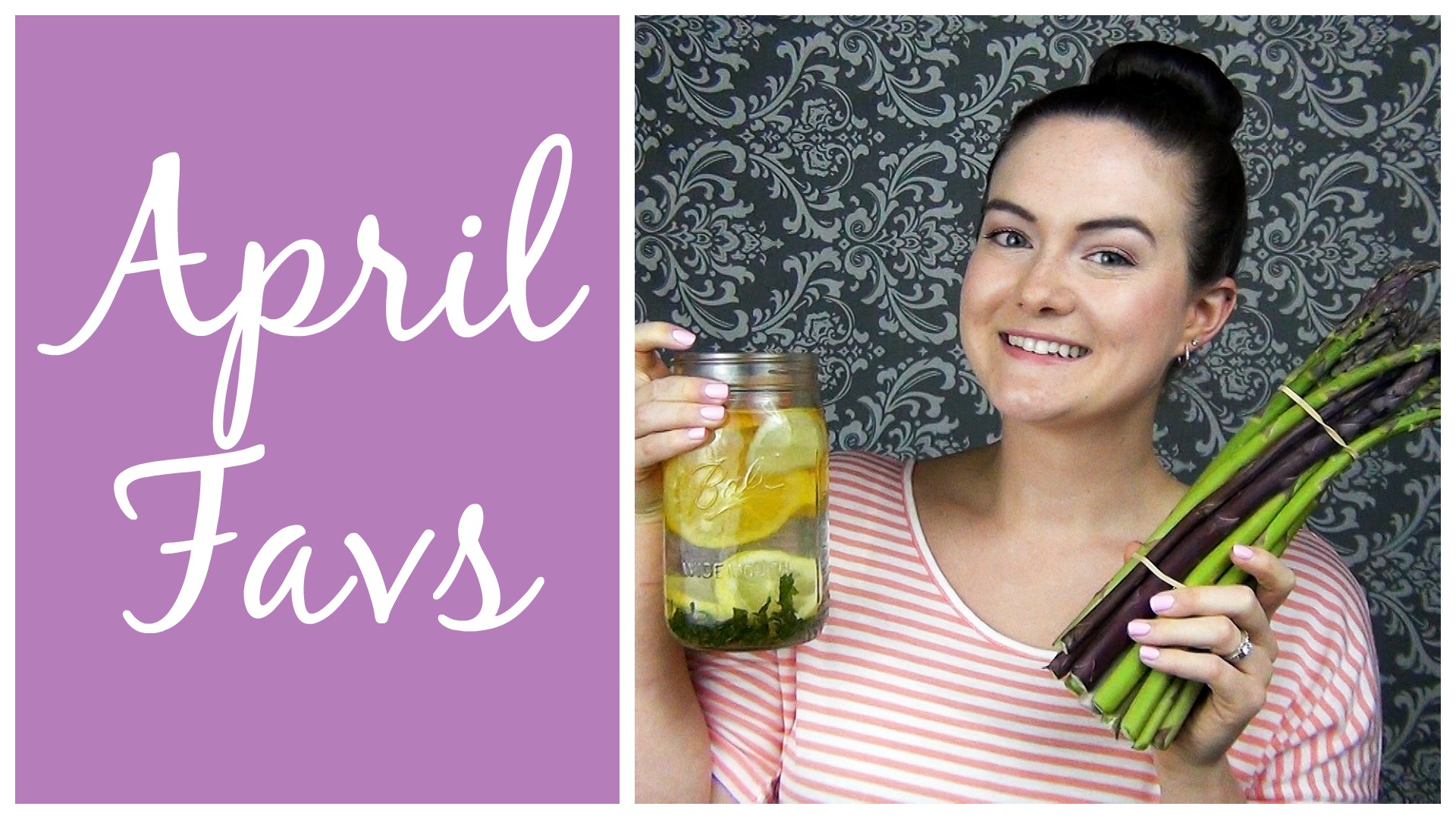
April is almost over and that means it's time to talk about my favorite things from the past month! This month, I've been switching up my water drinking routine and loving that spring produce is finally here! I've also tried some awesome new beauty products this month that have totally changed my every day routine.
Doctor Oz is coming under fire again, this time from a group of physicians who wrote a letter to Columbia University asking that Dr. Oz be removed from his faculty position. Many in the medical profession have strong feelings about Dr. Oz. Here's what I think.
Going to your local farmers' market is a great way to get healthy food and support your local community, but, if you've never been before, it can be a little intimidating. Here are a few simple tips to make your first farmers' market experience a great one!
Eggs can be an incredibly healthy food, but all of the labels and lingo on their packaging can get confusing. Cage free? Free range? Organic? Pastured? What does it all really mean? Here's your guide to understand egg labels so you can get the best eggs for you and your family.
The FDA recently sent a letter to the maker of KIND bars to tell them that they cannot use the word "healthy" on several of their bars. For the FDA, it's all about the fat. The FDA says that KIND bars have too much saturated fat to put the word healthy on their packaging. But are KIND bars really unhealthy? Plus, a recipe for homemade KIND bars in this Real Food Round-Up!
We've made a lot of progress on the garden! The area has been expanded and I've got lots of plant starts growing inside under my grow lights. Here's an overview of how everything is coming along!
One aspect of healthy eating that a lot of people miss is eating seasonally. Eating seasonally means eating the foods that are in season in your local area. Following a seasonal pattern with your meals has several benefits, including better nutrition and more money in your pocket. Plus, it's the best way to not get bored with your meals.
The drought in California is a real problem. Here's what you can do to help if you live in California and even if you don't. Plus, contaminated breast milk being sold online and a banana muffin recipe in this week's Real Food Round-Up.
Today I'm sharing one of my favorite quick and easy healthy snacks. It's the perfect option for when you're in a hurry or are craving something a little sweet.
We all know how important healthy bacteria are for our gut, but what about all of the beneficial bacteria that live on our skin? When we shower, we are washing all of this bacteria right down the drain. I've recently started thinking about this issue and how it might negatively impact my health, so I have decided that I am going to stop taking showers. It might sound strange, but I have to make my health a priority and do what's best for me.
This week's Real Food Round-Up is all about Easter! I'm sharing some healthy Easter recipes, including how to dye eggs naturally and yummy homemade Easter candy.
Easter usually involves quite a bit of candy, so why not make some of that candy yourself? Today, I'm showing you how to make 3 different chocolate eggs: a milk chocolate peanut butter egg, a dark chocolate coconut egg, and a white chocolate lavender egg. Making these chocolates at home means you get to use the best quality ingredients and it's a fun activity for kids and grown-ups alike!
I can't believe March is almost over! Here are some of my favorite things from the past month, including a healthy snack for you salty/savory lovers, a fun food festival, a gorgeous handmade jewelry find, fitness, and more!
We know that the overuse of antibiotics, including in animal agriculture, is leading to the development of antibiotic resistant bacteria. Now, new projections from Princeton suggest that this problem is only going to grow in the future.
It's important to prioritize healthy food in your budget, but you also don't want to be spending extra money when you don't have to. Here's how you can save money on healthy food, no coupon clipping required.
One of the best ways to save money on healthy food is to reduce your food waste. It's estimated that 40% of food goes to waste. That's a big problem, especially when there are so many people going hungry. Plus, when you waste food, it's like throwing your hard earned money in the garbage. Here are some things you can do to reduce your food waste.
Meal plan. Planning your meals means that you can buy only what you need and don't end up with extra food at the end of the week. This helps eliminate science experiments in the back of the fridge and rotting produce that ends up getting tossed.
Be ok with food that isn't perfect. Quite a bit of food goes to waste because of minor cosmetics issues. Embrace the fact that food is biological and is going to have it's quirks and imperfections. If there's a bad spot on your apple or tomato, cut it away and eat the rest rather than throwing the whole thing away.
Use everything. The scraps and extras that you're throwing away might actually be able to provide you with an extra meal. For example, use chicken bones to make your own broth. It's easy and that broth can be used to make soup for dinner the next day. You can also save veggie scraps like carrot ends, celery ends, onion tops, and ginger peels in a bag in your freezer to add into your homemade broth. This means that you are squeezing every last bit of nutrition and every last penny out of something that would have ended up in the trash.
Compost. Speaking of trash, compost whenever possible. Even if you're trying really hard, things are still going to go bad on occasion. Plus, if you're eating lots of fresh produce, you're also probably throwing away lots of cores and other little bits. Composting these items allows them to decompose naturally, rather than sitting in a plastic bag in the landfill. Plus, if you happen have a garden or house plants, your homemade compost can serve as a great free natural fertilizer for your plants.
Grow your own. When you grow your own fruits and veggies, you can get the best produce in exchange for a little bit of your time and energy. Plus, you can eat things that would never make it to the grocery store or farmers' market. If a tomato splits on the vine, you can pick it and eat it right away. Something like that would end up getting tossed on a farm, because it could never make it to market without spoiling and, even if it did, no one would buy it.
A recent partnership between Kids Eat Right (of the Academy of Nutrition and Dietetics) and Kraft has got a lot of people fired up. It's bringing the credibility of dietitians into question in the media and I had to give my thoughts on the issue.
UPDATE: I want to clarify something from the video. Kids Eat Right is part of the Academy of Nutrition and Dietetics Foundation, which is the philanthropic arm of the Academy of Nutrition and Dietetics. The AND Foundation has a different board and makes decisions separately from AND. It is unclear to me at this time what sort of oversight, if any, AND has over the AND Foundation and it's decisions.
 Here's everything I got at my local farmers market in early May in Virginia! Spring is one of my favorite times of the year because of all of the fresh, crisp produce we get after a long, cold winter. We've got so many delicious spring fruits and veggies right now and I'm loving it!